

Why Does Being Present Matter More Than Ever in 2026?

In our fast-paced 2026, where digital notifications constantly vie for our attention and the world seems to spin faster than ever, the concept of being truly present often feels like a distant luxury. Yet, I’ve observed that present moment awareness isn’t just a desirable trait; it’s a critical skill for navigating modern life with grace and resilience. It’s about deliberately paying attention to the here and now, without judgment, engaging fully with whatever you are doing.
The Unprecedented Urgency of 2026
The landscape of 2026 presents unique challenges. We’re bombarded with information, expectations, and an ever-present sense of urgency. This constant pressure has a tangible cost: studies show that a staggering 74% of people experienced stress to the point they could not cope. Unmanaged stress, as we know, isn’t just a mental burden; it’s linked to sleep disorders, depression, and heart conditions. It’s clear our minds are struggling to keep up, often pulled between past regrets and future anxieties.
Staying grounded is no longer optional; it’s essential for well-being.
This is where present moment awareness becomes our anchor. It’s the counter-force to the relentless pull of distraction and worry. By cultivating mindful living, we begin to reclaim our mental space and emotional equilibrium.
Reclaiming Your Focus: The Benefits of Being Present
Imagine a life where you feel less overwhelmed and more in control. That’s the promise of developing your everyday awareness. Mindfulness practice, the active pursuit of presence, is associated with a wealth of benefits:
- Increased happiness and contentment: You find joy in the small things, rather than constantly chasing the next big one.
- Enhanced mental clarity and concentration: Your focus improves, boosting productivity and decision-making.
- Reduced stress and anxiety: Programs like
Mindfulness-Based Stress Reduction (MBSR)have been shown to significantly lower cortisol levels, helping you torelease anxiety. - Better emotional management: You observe your feelings without being consumed by them.
These aren’t just abstract ideas. Research consistently shows that mindfulness can lower blood pressure, improve sleep quality, and boost immune function. It offers a tangible pathway to a healthier, more balanced existence, as explored in guides on how to enhance your daily presence through mindfulness in 2026.
Zenfinity’s Approach to Inner Clarity
At Zenfinity, we understand the struggle to develop present moment awareness in a chaotic world. Our platform is built on the belief that everyone deserves inner clarity and tools for stress reduction. We blend ancient wisdom, like Vedic Astrology AI insights, with modern Mindset Coaching and practical Meditation and Breathwork exercises.
For those new to this journey, our resources, such as how to begin mindfulness with simple steps for inner clarity in 2026, provide an accessible entry point. We offer guidance to help you find calm and live in the moment even amidst the daily grind. It’s about empowering you to make conscious choices and find peace, one mindful moment at a time. Through practices like a quick 5 senses check-in or a short guided meditations session, you can begin to transform your relationship with the present. Zenfinity is your partner in cultivating self-awareness and emotional wellness, guiding you towards more conscious decision-making and personal guidance.
What Are the Transformative Benefits of Mindful Living?
Discovering present moment awareness isn’t merely a fleeting trend; it’s a foundational shift that unlocks profound improvements across every facet of your life. In a world where unmanaged stress is linked to serious health issues like sleep disorders, depression, and heart conditions by 2026, embracing mindful living becomes not just beneficial, but essential for well-being and productivity.
Cultivating Inner Calm and Focus
One of the most immediate and impactful benefits of a consistent mindfulness practice is the profound stress reduction it offers. Studies show that Mindfulness-Based Stress Reduction (MBSR) programs significantly lower cortisol levels and alleviate anxiety symptoms. This isn’t surprising when we consider that 74% of people experienced stress to the point they could not cope, highlighting an urgent need for effective strategies to release anxiety.
Mindfulness empowers you to respond to stress, rather than react to it.
Beyond just lessening stress, mindful living sharpens your focus and enhances mental clarity. By deliberately paying attention to the present moment without judgment, you train your mind to stay grounded. This deliberate focus is crucial in an age where constant digital stimulation often pulls our attention in a million directions, contributing to mental stress and anxiety. For practical steps to achieve this, explore strategies to enhance presence through daily mindfulness.
Mastering Emotional Landscapes
Mindfulness also offers a powerful toolkit for emotional management. It teaches us to observe our emotions as they arise, without getting swept away by them. This increased self-regulation allows for a more considered response to challenging situations, rather than impulsive reactions. You gain the space to choose your emotional state.
This capacity for emotional regulation is linked to greater happiness, contentment, and an overall improved quality of life. It’s about building an inner resilience that allows you to navigate life’s inevitable ups and downs with greater equanimity. If you’re looking to gain more control over your feelings, learning how to begin mindfulness can set you on the right path.
Boosting Physical Health and Relationships
The ripple effects of mindful living extend far beyond the mental and emotional. Research consistently demonstrates tangible physical health improvements, including lower blood pressure, improved sleep quality, reduced chronic pain, and a stronger immune system. These are not minor gains; they represent a fundamental upgrade to your physical vitality.
Furthermore, by fostering enhanced empathy and compassion, mindfulness significantly improves personal relationships. When you are truly present with others, you listen more deeply, understand more fully, and connect on a more authentic level. This creates a positive feedback loop, enriching your social connections and bolstering your overall sense of well-being.
Ultimately, a committed mindfulness practice cultivates a robust inner world, capable of navigating external pressures with greater ease and grace. Zenfinity is designed to support you on this journey, offering tools like guided meditation and breathwork that foster inner clarity and self-awareness, helping you integrate these transformative benefits into your daily life for lasting calm and confidence.
How Can Busy People Integrate ‘Micro-Mindfulness’ Into Their Day?
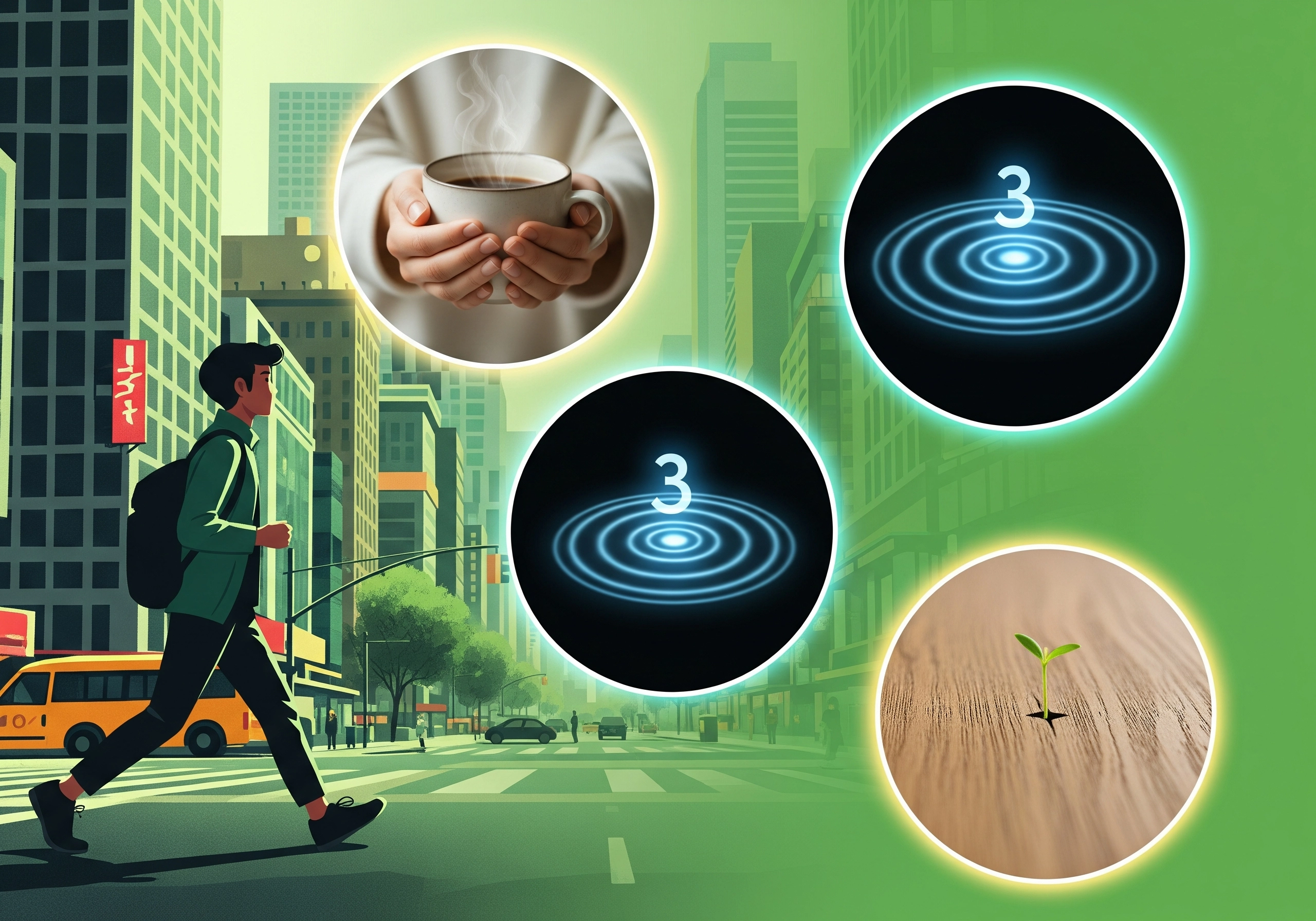
In our fast-paced 2026 world, where unmanaged stress is a significant concern and 74% of people experience stress to the point they cannot cope, finding moments of calm feels like a luxury. Yet, integrating “micro-mindfulness” into your day isn’t about finding extra time; it’s about transforming the time you already have. This approach involves short, frequent bursts of mindful attention, making present moment awareness accessible even for the busiest schedules.
The Power of Brief Pauses
Many believe mindfulness requires extended meditation sessions. However, the true strength lies in consistency, not duration. Even five to ten minutes of daily practice can make a meaningful difference. These small acts of “microdosing mindfulness” help reset your nervous system, lower cortisol levels, and improve focus, proving that mindful living is not a time commitment but a shift in attention.
The Three-Breath Reset: Your Instant Oasis
One of the most immediate and effective mindfulness exercises for busy people is the “three-breath reset.” This technique can be done anywhere, anytime, providing an instant calm amidst chaos. It’s a fundamental step for anyone new to mindfulness for beginners.
How to Practice the Three-Breath Reset:
- First Breath: Gently close your eyes (if safe) or soften your gaze. Take a deep, slow inhale, feeling your belly expand. Exhale fully, releasing any tension you might be holding. Acknowledge your current state without judgment.
- Second Breath: Inhale again, drawing in a sense of calm and clarity. As you exhale, consciously let go of distractions, worries, or mental clutter. Focus purely on the sensation of the breath.
- Third Breath: Take one more deep, deliberate breath. With the inhale, bring your awareness fully to the present moment. As you exhale, set an intention to carry this renewed focus into your next task.
This simple sequence offers a powerful way to release anxiety and regain composure, demonstrating how minimal effort can yield significant results. For more strategies on stress reduction, consider exploring how to release anxiety.
The Five-Senses Check-in: Anchoring in the Now
Another highly effective and beginner-friendly technique for cultivating everyday awareness is the five-senses check-in. This grounds you firmly in your immediate environment, pulling you away from future worries or past regrets. It’s a cornerstone of how to transform your day with simple mindfulness methods.
Practicing the Five-Senses Check-in:
- See (5 things): Look around and name five distinct objects you can see. Notice details you might usually overlook.
- Feel (4 things): Identify four physical sensations. This could be the texture of your clothes, the warmth of your coffee, or the feeling of your feet on the floor.
- Hear (3 things): Listen for three different sounds. Distant traffic, the hum of an appliance, or your own breathing.
- Smell (2 things): Notice two distinct smells, however subtle, in your environment.
- Taste (1 thing): Acknowledge one taste in your mouth, whether it’s from a recent meal or just the ambient taste.
This exercise redirects your attention from internal chatter to external reality, making it an excellent way to practice mindfulness and reduce mental overwhelm. You can learn more about these types of exercises from resources like Positive Psychology’s mindfulness exercises.
Integrating Mindfulness with Zenfinity
Making these micro-mindfulness moments a consistent habit is where the real transformation happens. At Zenfinity, we understand the demands of a busy life. Our app provides guided meditations and breathwork exercises that are perfect for these short, intentional pauses, helping you cultivate inner clarity and focus. Our AI-driven mindset coaching can further support your journey, offering personalized guidance for integrating these practices seamlessly into your day. Visit Zenfinity to explore how our tools can empower your mindful journey.
Which Everyday Activities Can You Make Mindful?
We often imagine mindfulness as something reserved for quiet meditation cushions or serene natural settings. Yet, the profound truth is that every single moment offers an invitation to cultivate present moment awareness. As we navigate the bustling landscape of 2026, transforming routine activities into opportunities for mindful living isn’t just a practice—it’s a path to inner clarity and reduced stress.
The Art of Mindful Eating
Eating, a daily necessity, can become a powerful mindfulness practice. Instead of rushing through meals, try to engage all your senses. Notice the colors, textures, and aromas of your food. Feel the weight of the plate, the sensation of the fork in your hand. As you chew, pay attention to the flavors unfolding, the subtle shifts, and the sounds. This deliberate attention transforms a mundane act into an experience of deep gratitude and nourishment.
Mindful eating connects us to our food, our bodies, and the moment.
This simple shift helps us savor our food more deeply and often leads to more conscious dietary choices. It’s about appreciation, not judgment.
Mindful Walking: Every Step a Meditation
From a quick stroll to a purposeful commute, walking is another prime candidate for everyday awareness. Instead of letting your mind wander to your to-do list, bring your attention to your feet. Feel each step grounding you, the subtle pressure as your heel strikes and your toes lift off. Notice the rhythm of your breath, the sensations of the air on your skin, and the sounds around you without judgment. Whether you’re practicing a formal zen meditation or simply walking, the goal is to be fully there.
This practice is not about clearing your mind, but about observing what arises with gentle curiosity, returning your focus to your physical experience.
The Power of Mindful Listening
In a world filled with distractions, truly listening has become a rare skill. Mindful listening means giving your full, undivided attention to another person without interrupting, formulating your response, or allowing your mind to drift. Notice their tone of voice, their body language, and the emotions conveyed. This fosters deeper connection and understanding, enhancing your relationships significantly.
- Pause before responding: Allow a moment of silence to truly absorb what was said.
- Observe non-verbal cues: Pay attention to gestures and facial expressions.
- Listen without judgment: Focus on understanding, not evaluating.
By engaging in active, mindful listening, we honor the speaker and enrich our own present moment awareness.
Cultivating Gratitude and Intentions
Beyond specific activities, integrating gratitude and setting mindful intentions are crucial for continuous mindfulness practice. Before starting an activity, take a moment to set an intention: “I intend to fully experience this walk,” or “I intend to listen with an open heart.” Similarly, expressing gratitude for the food on your plate, the ability to walk, or the presence of a friend deepens your connection to the positive aspects of your life. This reframes ordinary moments, making them feel more joyful and exciting.
At Zenfinity, we understand the challenge of integrating these practices into a busy life. Our app offers mindset coaching and guided breathwork exercises designed to help you cultivate this kind of everyday awareness, providing the tools you need to find calm, clarity, and confidence in every moment.
How Can You Start a Meditation Practice, Even as a Beginner?

Starting a mindfulness meditation practice might seem daunting at first, especially with the common misconception that it requires hours of silent contemplation or a completely clear mind. The truth, however, is far more accessible. It’s about cultivating present moment awareness, and anyone can begin, regardless of how busy their life feels.
The Beginner’s Journey: Demystifying Meditation
Many people, when they first try to practice mindfulness, encounter a mind that feels busier than ever. They might think, “I’m doing it wrong,” or “My mind just won’t shut up.” This is a completely normal experience. Mindfulness isn’t about emptying your mind, but rather observing what’s there without judgment. It’s a skill, and like any skill, it improves with consistent effort, not perfection.
Even five to ten minutes of daily meditation can make a meaningful difference.
Our approach at Zenfinity emphasizes practical, actionable steps for mindfulness for beginners, integrating ancient wisdom with modern psychological understanding. We believe that true self-regulation and inner clarity come from consistent, gentle practice.
Your First Steps: A Simple Framework
To help you get started on your journey, here’s a straightforward framework for establishing a daily mindfulness meditation practice:
1. Start Small and Be Consistent
Begin with just 2-5 minutes a day. The goal is consistency, not duration. Choose a time when you can reliably commit to this brief moment of stillness, whether it’s first thing in the morning, during a lunch break, or before bed. Remember, structured goal-setting increases success rates by 90%.
2. Find Your Space
Choose a quiet spot where you won’t be disturbed. It doesn’t need to be a dedicated meditation room; a corner of your bedroom or office will suffice. Sit comfortably, with a straight but relaxed spine, either on a cushion or in a chair. Place your feet flat on the floor if seated.
3. Focus on Your Breath
The breath is your anchor to the present moment. Gently bring your attention to the sensation of your breath—how it feels as it enters and leaves your body. You might notice the rise and fall of your abdomen, or the air moving through your nostrils. This simple focus helps in finding calm and acceptance in the present moment.
Your breath is always with you, a constant tool for returning to the present.
4. Observe Without Judgment
Thoughts will inevitably arise—memories, plans, worries. When they do, simply acknowledge them without judgment. Don’t engage with them or push them away. Imagine them like clouds passing in the sky, and gently redirect your attention back to your breath. This non-judgmental observation is a cornerstone of mindfulness for beginners.
5. Leverage Guided Meditations
For many, especially beginners, guided mindfulness meditation can be incredibly helpful. An instructor’s voice can keep you focused and provide encouragement. Resources like UCLA Mindful’s guided meditations offer an excellent starting point, providing clear instructions and a sense of support.
Zenfinity also offers personalized guidance through our Inner Coach AI and a variety of guided meditation and breathwork exercises. Our app is designed to help you build a sustainable practice, offering bespoke insights and support tailored to your unique journey toward inner clarity and emotional wellness at Zenfinity.
Consistently applying these steps, even for short durations, will gradually strengthen your ability to remain present, reduce stress, and cultivate a deeper sense of calm.
What Are the Key Strategies to Sustain Your Mindfulness Journey?
Starting a mindfulness journey is a significant step, but sustaining it amidst the demands of modern life in 2026 presents its own unique set of challenges. It’s not about achieving a perfect state, but rather cultivating a consistent, evolving practice that seamlessly integrates into your daily existence. The goal is to build a lasting habit of present moment awareness that truly transforms your well-being.
Cultivating Consistent Engagement
The foundation of a sustainable mindfulness practice lies in consistency, not intensity. Brief, regular moments of awareness often yield more profound long-term results than sporadic, lengthy sessions. Think of it as ‘microdosing mindfulness’—integrating short practices like a “three-breath reset” or a five-senses check-in throughout your day.
Consistency is the quiet engine of profound change.
Even five to ten minutes of daily meditation can make a meaningful difference, helping to rewire your brain for greater calm and focus. This steady application builds the mental muscle for mindful living, making it less of a chore and more of an intrinsic part of who you are.
Deepening Your Present Moment Awareness
Moving beyond foundational exercises, the next step is to infuse true everyday awareness into all aspects of your life. This means consciously paying attention to routine activities—the taste of your food, the sensation of walking, or the nuances of a conversation. This non-judgmental observation helps to anchor you in the now, reducing the mental chatter that often fuels stress.
This deeper engagement is a pathway to increased happiness, contentment, and mental clarity, as indicated by numerous studies on mindfulness practice. It shifts your focus from merely getting through the day to fully experiencing it.
Navigating Challenges and Preventing Burnout
It’s natural to encounter periods where your practice feels difficult or uninspired. Common pitfalls include expecting immediate perfection, falling into self-criticism, or feeling overwhelmed by the sheer volume of information. Remember, setbacks are not failures; they are opportunities to recommit with renewed understanding.
Unmanaged stress in 2026 is linked to sleep disorders, depression, and decreased productivity, making consistent stress reduction through mindfulness more critical than ever. If you’re seeking a structured approach to deepen your mindfulness practice and explore comprehensive programs like Mindfulness-Based Stress Reduction (MBSR), resources like the free online course from Palouse Mindfulness can provide invaluable guidance. These programs offer frameworks to help you navigate the complexities of long-term practice.
Sustaining mindfulness requires patience and self-compassion, transforming challenges into growth.
Leveraging Tools for Sustained Growth
Just as structured goal-setting increases success rates by 90%, having a clear plan and supportive tools is vital for your mindful living journey. Our Zenfinity app is designed to support this continuous journey, offering Mindset Coaching, guided Meditation, and Breathwork exercises to help you maintain everyday awareness and achieve deeper stress reduction. We provide personalized guidance, empowering you to self-regulate and make mindful decisions, ensuring your journey toward inner clarity and confidence is consistent and rewarding.
What Should You Do When Your Mind Wanders or Challenges Arise?

It’s a universal experience in any new practice: the moment your mind decides to stage a rebellion. You sit down for a moment of quiet, intending to cultivate present moment awareness, and suddenly your brain launches into a highlight reel of your to-do list, past regrets, or future anxieties. This isn’t a sign of failure; it’s simply the mind doing what it evolved to do—thinking.
When Your Mind Wanders: A Gentle Return
The first thing to understand is that a wandering mind is not a problem to be solved, but a natural phenomenon to be observed. When you notice your thoughts drifting during mindfulness meditation or a simple breathing exercise, the goal isn’t to force them away. Instead, acknowledge the thought without judgment.
Simply noticing where your mind has gone is a moment of mindfulness itself.
Gently, without self-criticism, bring your attention back to your anchor—be it your breath, the sounds around you, or the sensations in your body. This act of redirection, repeated countless times, is the core of many mindfulness exercises and strengthens your mental muscle for focus.
Overcoming Self-Judgment and Frustration
Another common challenge is the inner critic. You might find yourself thinking, “I’m not doing this right,” or “My mind is too busy for this.” This self-judgment can be a significant barrier. Remember, mindfulness is about non-judgmental observation, and that includes observing your own critical thoughts.
Approach these feelings with the same gentle curiosity you would any other thought. Recognize them, and then consciously choose to let them pass. This practice of self-compassion is crucial for sustainable progress in stress reduction and overall well-being.
Rekindling Motivation When Challenges Arise
There will be days when motivation wanes, and the idea of engaging in mindfulness feels like another item on an already overwhelming list. When this happens, reconnect with why you started.
Perhaps you seek greater inner clarity, improved emotional regulation, or a break from the relentless pace of 2026. Data shows that unmanaged stress is linked to a myriad of health issues, from sleep disorders to heart problems, making your practice vital for resilience. Even brief moments of practice, like a “three-breath reset,” can re-establish your connection to the present.
Consistency, not perfection, is the cornerstone of a thriving mindfulness journey.
Consider exploring structured guidance. Resources like the free online MBSR program at Palouse Mindfulness offer comprehensive support. For personalized guidance and tools, platforms like Zenfinity can provide tailored mindset coaching and guided meditation to help you navigate these challenges and deepen your practice, ensuring you have the support to sustain your path to inner peace and clarity.
How Will Embracing the Present Shape Your Future?
It’s a powerful question, isn’t it? How does truly being here, right now, profoundly alter where you’re headed? The journey we’ve embarked upon together, exploring present moment awareness, isn’t just about fleeting moments of peace. It’s about fundamentally reshaping the trajectory of your life, preparing you for a more peaceful and productive 2026 and beyond.
We’ve delved into how a consistent mindfulness practice acts as your essential anchor in a perpetually busy world. From the simple yet profound “three-breath reset” to integrating mindful eating and walking into your daily rhythm, each deliberate act of presence chips away at the relentless noise. This commitment isn’t merely a trend; it’s a vital pathway to significant stress reduction and enhanced mental clarity, enabling you to navigate the complexities that modern life inevitably presents.
Every mindful moment you cultivate today is an investment in your future self.
Embracing mindful living equips you with an invaluable toolkit: resilience in the face of uncertainty, sharper decision-making capabilities, and a deep well of inner peace that transcends external chaos. Imagine facing future challenges not with reactive anxiety, but with calm, focused intention. This isn’t wishful thinking; it’s the tangible, research-backed outcome of consistent practice. Studies consistently show that individuals who incorporate mindfulness experience improved well-being and greater capacity to cope with life’s demands.
This is precisely where Zenfinity comes into play. We understand that sustaining present moment awareness amidst life’s demands requires accessible, personalized support. Our platform offers AI-driven Vedic astrology insights, tailored mindset coaching, and a rich, diverse library of guided meditation and breathwork exercises. We are designed to provide the precise guidance you need, empowering your self-regulation and enhancing every decision you make, leading to a future rooted in calm, clarity, and unwavering confidence. Zenfinity helps you translate these practices into tangible life improvements.
The future isn’t a destination you passively arrive at; it’s a vibrant tapestry woven by the quality of the moments you choose to live today. By committing to mindfulness practice, you’re not just improving your immediate experience—you’re actively designing a more peaceful, productive, and fulfilling life. Start small, stay consistent, and witness the profound transformation as each mindful breath builds the future you truly desire.
Ready to cultivate inner calm and clarity amidst the chaos of 2026? Discover personalized guidance and AI-powered insights to master present moment awareness with Zenfinity.
People Also Ask
What is present moment awareness and why is it important in 2026?
Present moment awareness, or mindfulness, is the practice of intentionally focusing on the ‘now’ without judgment. In 2026, with increased global stress and digital distractions, it’s vital for managing anxiety, improving focus, and enhancing overall well-being. It helps you navigate challenges with greater calm and clarity.
Can mindfulness really help reduce stress for busy people?
Absolutely. ‘Micro-mindfulness’ techniques, like the three-breath reset or a quick five-senses check-in, can be integrated into even the busiest schedules. These short practices help lower cortisol levels, reduce perceived stress, and improve emotional regulation, making mindfulness accessible for everyone.
How do I start a meditation practice if I’m a complete beginner?
Begin by dedicating just 5-10 minutes daily to a simple practice, focusing on your breath or bodily sensations. Guided mindfulness meditation sessions, like those offered by Zenfinity, are excellent for beginners as they provide structure and support, making it easier to build a consistent habit.
What are some simple ways to practice mindfulness in everyday activities?
You can make everyday activities mindful by paying full attention to the sensations involved, such as the taste of your food or the feeling of walking. Practicing active listening during conversations, expressing gratitude, or setting mindful intentions for your day also integrates present moment awareness into your routine.
What should I do when my mind wanders during mindfulness practice?
Mind wandering is a natural part of mindfulness. Instead of getting frustrated, gently acknowledge that your mind has strayed and kindly redirect your attention back to your anchor, such as your breath. Self-compassion is key; treat yourself with the same kindness you would offer a friend.
How does embracing the present moment impact future outcomes?
By cultivating present moment awareness, you build resilience and improve your decision-making abilities. This enhanced self-awareness and emotional regulation allow you to approach future challenges with greater confidence and less reactivity, leading to more intentional and fulfilling outcomes.